Systematization as a Growth Point for ERP
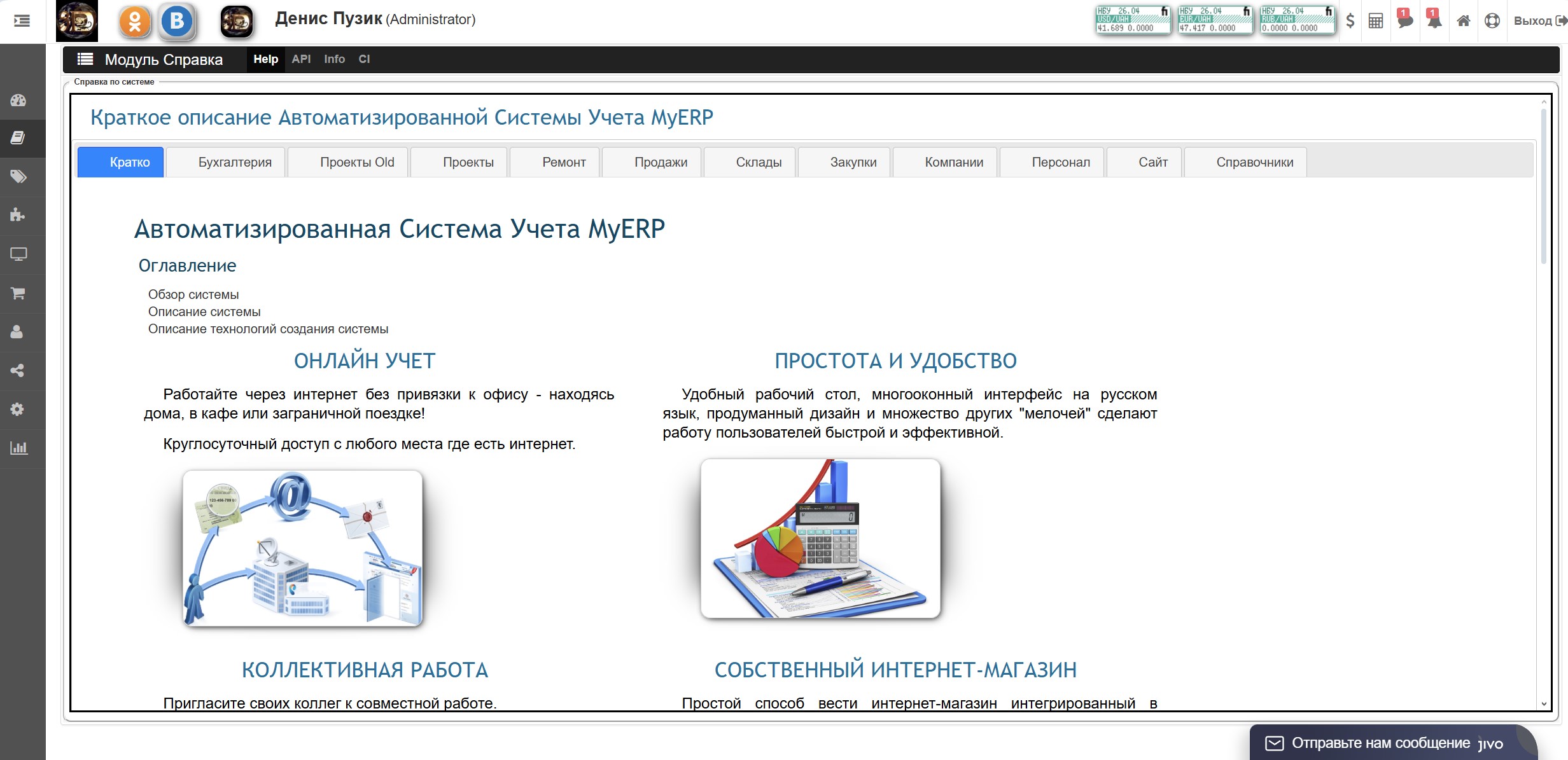
In 2019, the second version of MyErp was developed, marking a logical continuation and rethinking of Version 1. While Version 1 solved problems, Version 2 began shaping a system. The focus shifted from rapid deployment to stability, usability, and extensibility. This was the first step from a “tool” toward a “platform.”
Like Version 1, MyErp Version 2 continued to operate in two environments: internally within the development company and externally for clients. This preserved rapid feedback while validating the system under real-world conditions. The approach ensured a balance between controlled development and actual business needs. In effect, it became an embedded product validation mechanism.
One of the key development areas in Version 2 was improving the user interface. It became clear that system efficiency depends heavily on usability. Core interaction scenarios were redesigned, forms simplified, and navigation improved. This reduced the learning curve and increased user productivity.
In Version 2, MyErp significantly expanded its functionality. Project management and accounting modules were introduced, enabling coverage of a broader range of business needs. The system evolved from simple transaction tracking to comprehensive business management. This increased its overall value as a business tool.
One of the major changes was the recognition of the need for a more structured architecture. Separation of logic and data began, along with clearer system layering. This reduced coupling and improved code maintainability. However, the system still retained characteristics of a monolith.
Despite significant improvements, Version 2 still faced scalability limitations. Increasing users and data volumes put pressure on the system. The lack of full modularity and context isolation limited development flexibility. These constraints became evident when expanding into new business scenarios.
The main achievement of Version 2 was the emergence of platform thinking. The system was no longer seen as a set of features but as a foundation for future growth. Concepts like modularity, component reuse, and architectural flexibility became clear. This laid the groundwork for the transition to a SaaS model.
Version 2 of MyErp completed the systematization phase and prepared the system for its next level of evolution. It became clear that further growth required a complete architectural redesign with a cloud-based approach. The need for clear context separation and scalable infrastructure emerged. Thus, Version 2 became the bridge between a local product and a full SaaS platform.
Version 2 of MyErp shows how systematization and incremental improvements build the foundation for scalable solutions. The kaizen approach is reflected in the shift from chaotic growth to controlled evolution through architectural refinement. Instead of radical redesign, the system evolved step by step, strengthening its weaknesses. For IT and product teams, this is a model of transitioning to platform thinking. For investors, it signals controlled growth with a clear strategic direction.
“Philosophy Kaizen”